On the Truck
Installations We Finish Most Weeks
Steel, insulated and carriage-house doors, fitted on new track with the counterbalance sized to the door that actually went in.
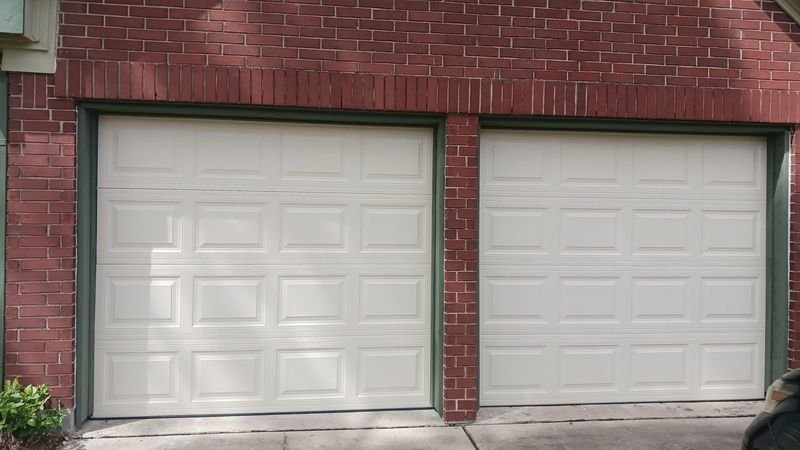
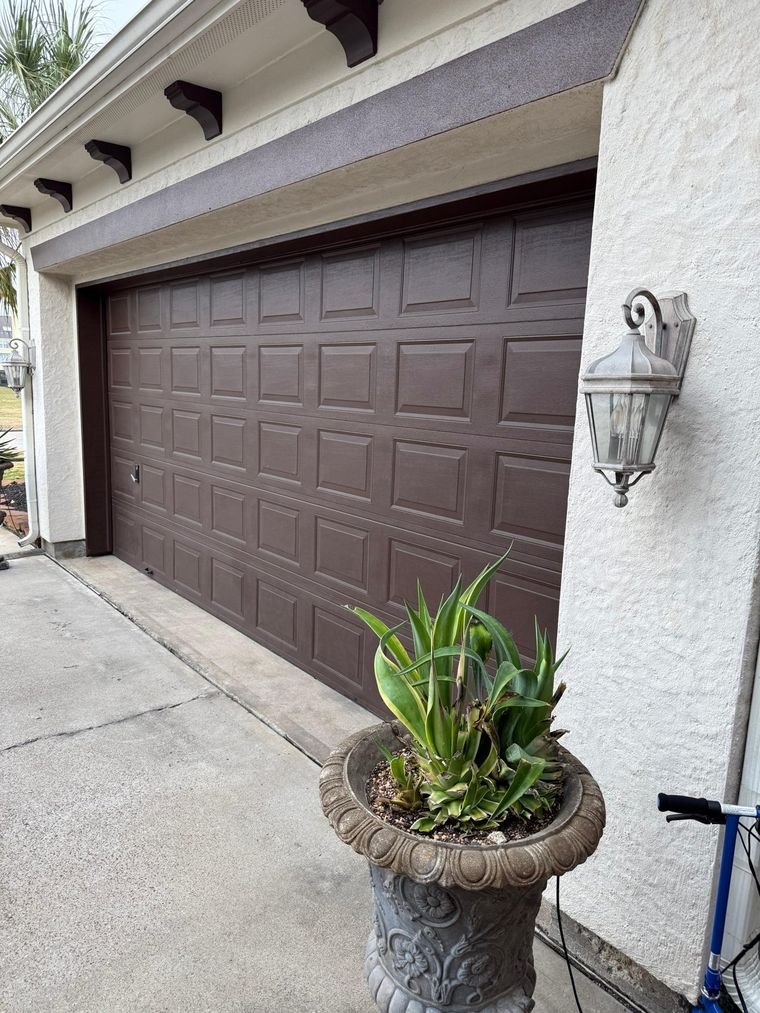
The garage door is the largest moving object on most houses and usually the largest single thing on the front of it. Steel, carriage-house and insulated doors, measured at your home, fitted with new track and counterbalance, and set up properly with the opener — starting with a free in-home estimate.
Sometimes there is no old door to argue about, and sometimes the old one is genuinely finished. If you are still weighing repair against replacement, that question has a page of its own — read the repair-or-replace guide first, because most doors we are asked to replace do not need replacing.
A new build, a converted carport, or a detached workshop getting its first door. Nothing to diagnose — it is purely a question of what fits the opening and what you want it to look like.
Nothing is broken; this is an upgrade and a real one. A garage sharing a wall with the house, or with a bedroom or bonus room over it, is where an insulated door is noticed every day of a Georgia August.
Rollers, hinges and a service fix most noise, and we will try that first. But a single-skin door on a wide opening drums no matter what hardware you hang on it. A stiffer insulated door is the only thing that actually quietens it.
Two-car houses with two singles, where one has already been replaced. Doing the second one is as much about the front of the house as about the door.
Rot or rust through the bottom section, creasing at the hinge plates, or a model so old that nothing is made for it any more. That case is covered properly on the replacement page.
The garage door is frequently a third of what anyone sees from the street. It is one of the few exterior changes where the visual difference is out of all proportion to the size of the job.
Almost every residential garage door sold in this market is a sectional door: four or five horizontal sections hinged together, running up a vertical track and then back along a horizontal one into the garage. What changes between them is the material, how many layers it is built from, and what the outside of it looks like. Nothing else about the way it works is different.
| Door | What it suits | What to know |
|---|---|---|
| Single-layer steel | Detached garages, workshops, rentals, tight budgets | One skin of steel, no insulation. Cheapest to fit and perfectly serviceable, but it is the loudest option and it dents easily. |
| Two-layer insulated steel | Attached garages, most family houses | Steel skin with polystyrene bonded to the back. Typically lands somewhere around R-6 to R-9, and is meaningfully quieter and stiffer than a single skin. |
| Three-layer steel sandwich | Rooms above the garage, garages people use | Steel, polyurethane, steel. The stiffest and quietest option and usually well into the teens on R-value. Heavier, so the spring system has to be sized for it. |
| Carriage-house style | Front-facing garages where the look matters | Overlays and hardware on a sectional door, so it lifts like a normal door rather than swinging out. Available on insulated and uninsulated bases. |
| Wood and composite overlay | Character properties, specific architectural styles | The best-looking option and the highest maintenance. In Georgia humidity it wants re-sealing on a schedule, not when it starts to look tired. |
R-value measures how well a door resists heat moving through it, and higher is better. The honest answer on whether it is worth paying for is that it depends entirely on what is on the other side of the door. A detached garage full of boxes gains very little. A garage that shares a wall with the living room, or that has a bedroom or a bonus room sitting over it, is where an insulated door earns its money in a Georgia August — and where an uninsulated one is doing your air conditioning no favours at all.
The second benefit is the one nobody mentions in the brochure. An insulated door is a stiffer door, and a stiffer door is a quieter one. On a 16 ft double, that difference is obvious from inside the house.
Standard residential openings in this part of Georgia are almost always 8 or 9 feet wide for a single and 16 feet for a double, at 7 feet high. But the number that matters is the opening on your house, not the size printed on the door that is coming off — and four other measurements decide what can be fitted at all:
All of that takes about twenty minutes at the house, and it is free. Estimating a door off a phone description is how people end up with a door that does not fit the hole it was bought for.
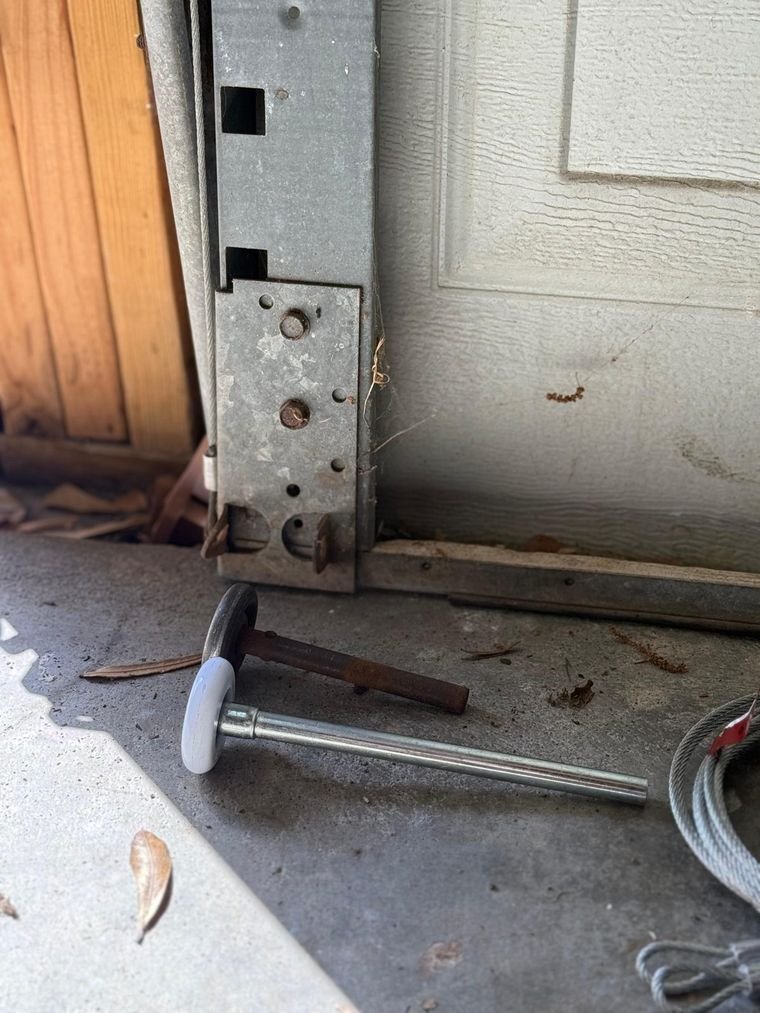
A door is only as good as the track it runs in and the counterbalance holding it up. Here is what actually happens on site, and why the unglamorous half of the list is the half that decides whether the door is still quiet in five years.
An installation is priced on the door and the opening, not on an hourly meter. The in-home estimate is free and carries no obligation, and you get a flat written price before anything is ordered. These are the things that move the number:
| Factor | Why it changes the job |
|---|---|
| Single or double | A 16 ft double is not two singles — it is more door, heavier hardware and a longer day. |
| Insulation layers | Single-skin, two-layer and three-layer doors are three different price brackets and three different weights of counterbalance. |
| Windows and glazing | Glass sections cost more and add weight, which feeds back into the spring sizing. |
| Carriage-house or overlay finish | Overlays, decorative hardware and non-standard colours all sit above a plain raised-panel door. |
| Headroom and sideroom | Low-headroom and low-sideroom garages need different track and hardware, and take longer to fit. |
| Opener | Re-hanging a healthy opener is included. A new opener fitted at the same time is an extra, and cheaper than a second visit. |
| Structural surprises | Rotten framing behind the stop moulding or a badly out-of-square opening has to be dealt with before a new door goes on it. |
Whatever the opening needs, you hear the number before anything is ordered. No hourly tricks, no discovering a second problem halfway through, and no pressure to replace a door that only needs a spring — if a repair is the better spend, that is what we will tell you.
From the first call to a door that works, with the measuring done properly and the price fixed before anything is ordered.
We come out, measure the opening, headroom, backroom and sideroom, look at what is behind the stop moulding, and talk through door types with you. No call-out charge and no obligation.
You get a firm price covering the door, the track, the hardware and the fitting. Nothing is ordered until you have approved it.
Old door off, new track squared to the opening, sections up, counterbalance sized to the finished weight, opener re-set, safety reversal tested, and the door run repeatedly before we leave.
Most doors we are called out to look at do not need replacing. These are the repairs that solve the problem instead.
The most common reason a door stops working, and a repair on almost any door. Matched pairs in high-cycle galvanized steel, re-balanced by hand.
See spring repair →An old opener does not mean an old door. Most are a gear or a logic board rather than a replacement, and we diagnose before quoting.
See opener repair →A door jammed at an angle looks terminal and usually is not. Unless a section is creased, re-tracking is a repair, not a replacement.
See off-track repair →Steel, insulated and carriage-house doors, fitted on new track with the counterbalance sized to the door that actually went in.
Send your name, number and roughly what you are after — single or double, and whether the garage is attached. We call back fast, usually within minutes during the day.
The questions we get asked on nearly every in-home estimate across Paulding and Cobb County.
Based at 132 Azalea Lakes Dr in Dallas, GA, with technicians covering Paulding, Cobb, Douglas, Fulton, Cherokee and Bartow County.
The towns in red have a page of their own, with the drive time and the local housing stock — or see every town we cover.
Not on the list? Call and ask — we'll tell you straight away.
One call and we come out, measure the opening properly and give you a flat written price — with no call-out charge and no obligation either way.
Name, number, and what's wrong — we'll call you right back, usually within minutes.